5 Things That Set My OCD Recovery Back
There are some things I only understood about OCD recovery after I had already spent years feeling stuck. At the time, I thought I was trying hard. And I was.
But I was also misunderstanding parts of OCD in ways that made everything feel more complicated, more overwhelming, and more impossible than it needed to be.
This is not advice, and I’m not writing this as a therapist. I’m sharing it from lived experience, because these are the things I wish I had been able to recognise sooner.
1. I overcomplicated OCD
I treated every thought like it was its own separate problem.
Every doubt felt like something I had to solve. Every worry felt like another individual hurdle to jump. Every new theme felt like proof that my OCD was different, worse, or somehow untreatable.
I couldn’t see the pattern underneath it all.
So instead of thinking, “this is OCD showing up again”, it felt like I was dealing with a huge web of separate problems.
Looking back, I think this is one reason visual resources mattered so much to me. I needed to see the shape of OCD, not just live inside the chaos of it.
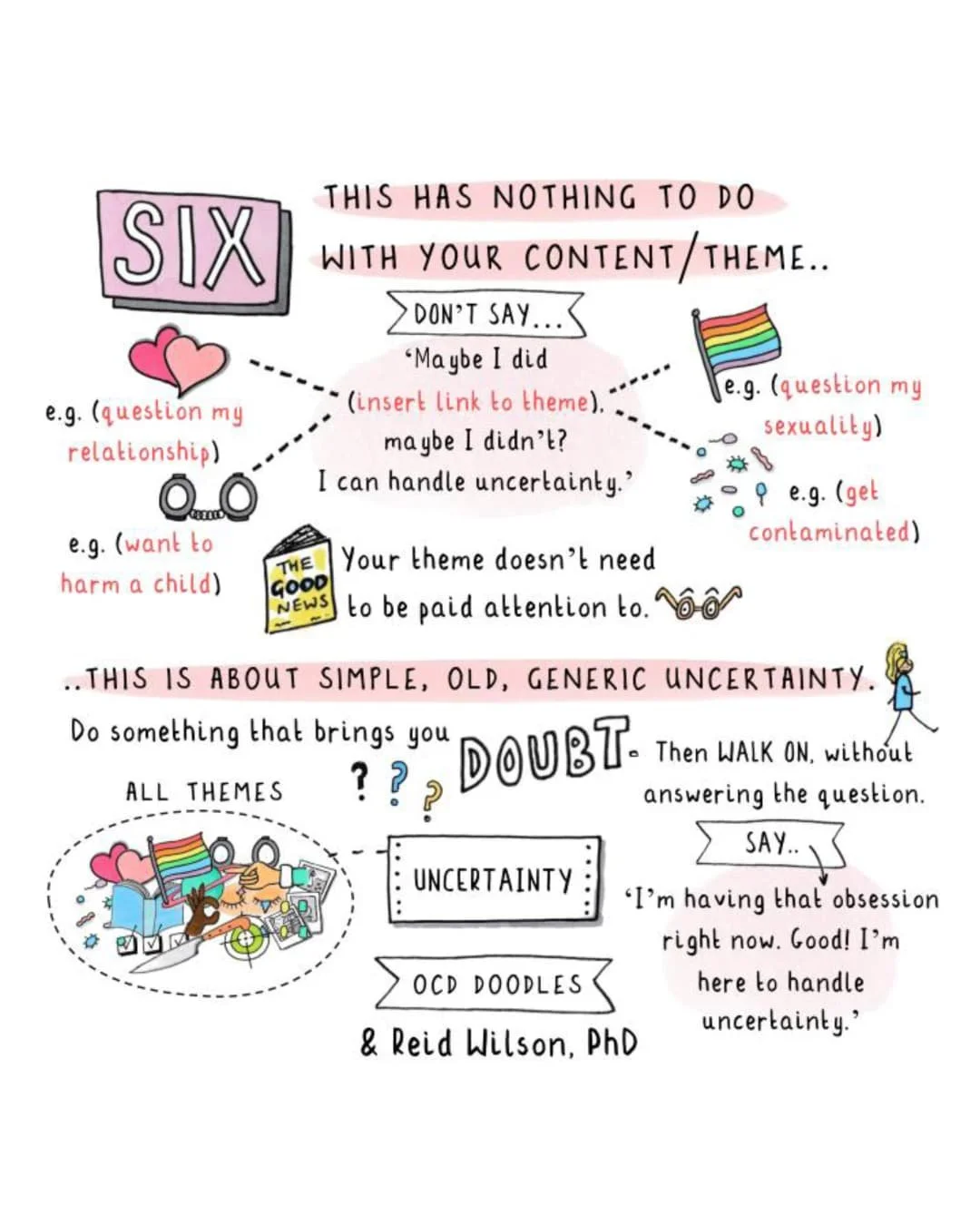
One of the 8 self-help principles for OCD doodle - a collaboration with Reid Wilson, PhD.
At first, knowing my themes helped me feel less alone and make sense of the chaos. But I didn’t want to stay trapped in categorising every thought.
Later, what mattered more was learning that I didn’t have to follow every doubt into the details.
That felt like a big shift in my recovery: from trying to categorise every thought, to seeing the same old uncertainty underneath.
2. I replaced one compulsion with another
At one point, I thought I was making progress because I was stopping some of the more obvious compulsions. But I didn’t realise I was replacing them with quieter ones.
I might stop a physical check, but then start mentally checking instead. I might stop asking someone else for reassurance, but then spend hours trying to reassure myself in my own head.
I didn’t recognise those mental behaviours as compulsions, so they kept me stuck in the same OCD cycle.
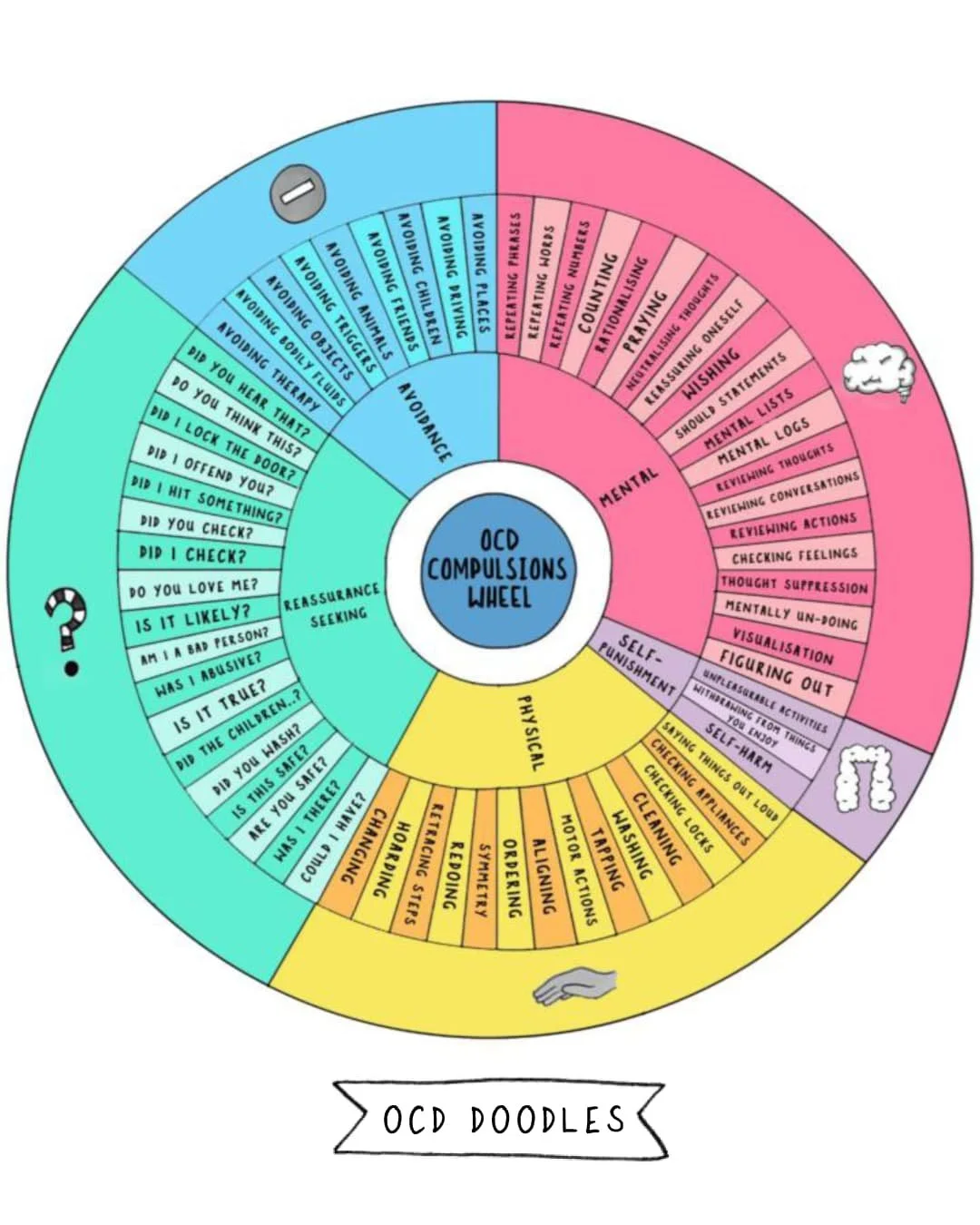
The Compulsions Wheel
I didn’t realise for a long time how many different forms compulsions could take. I thought if I stopped the obvious ones, I was making progress. But I was often just replacing them with something else, especially mental compulsions that were much harder to notice.
Seeing the range laid out like this would have helped me recognise what was actually happening, instead of feeling like I was failing in different ways.
3. I didn’t know what good OCD support should look like
I saw a lot of different people before I found support that actually treated OCD.
Some of it sounded helpful on the surface. Some of it probably was well-intentioned. But it didn’t always address the cycle I was caught in.
Even after diagnosis, it still took me a long time to understand what evidence-based OCD treatment (exposure and response prevention therapy, ERP) should involve, and how it related to obsessions, compulsions, distress and relief. That lack of clarity made it harder to know what was helping and what wasn’t.
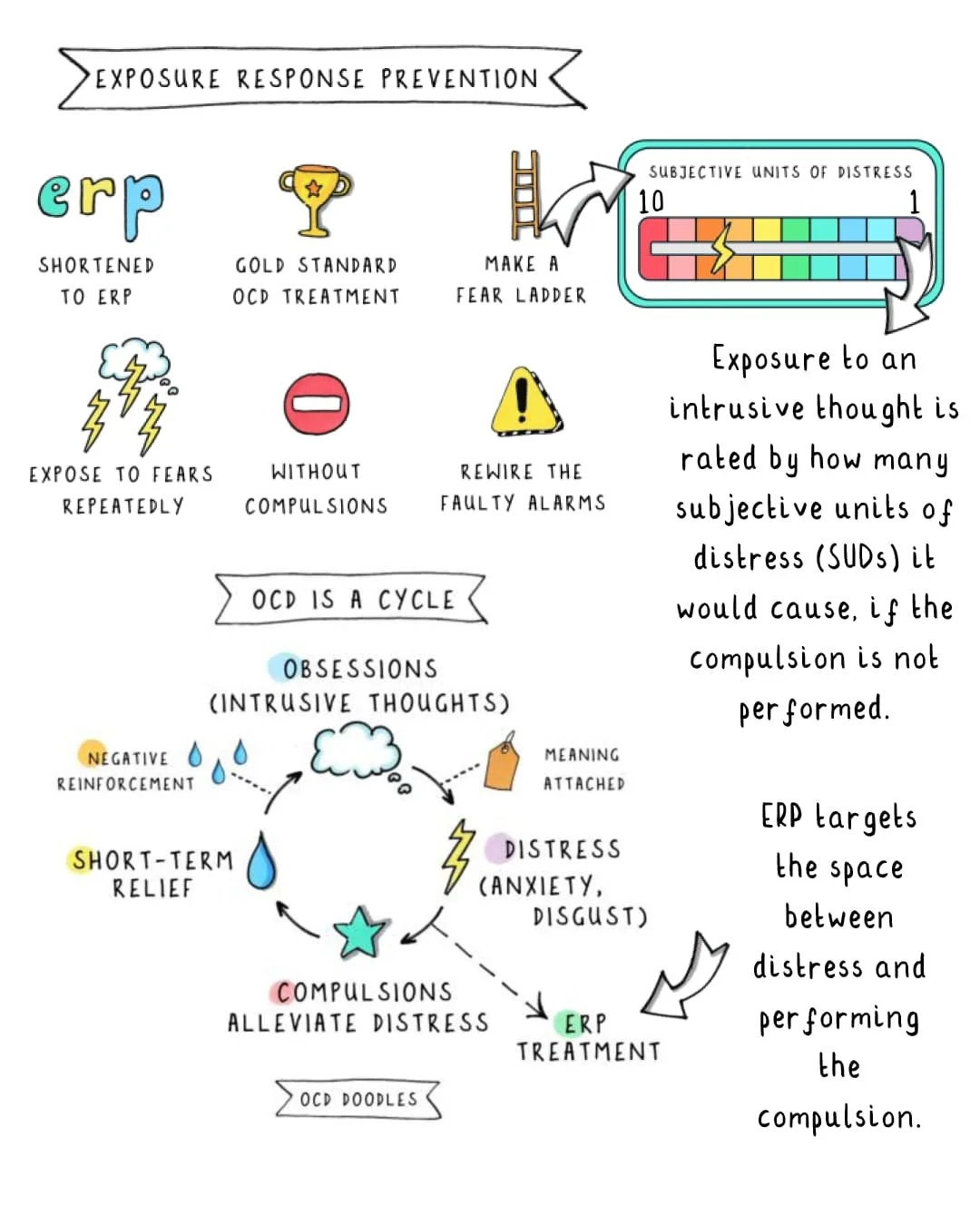
Exposure & Response Prevention Therapy (ERP)
Understanding the OCD cycle helped me see why ERP made sense. For me, the cycle showed how intrusive thoughts, distress, compulsions and short-term relief were all connected.
I could finally see that treatment wasn’t about solving every thought. It was about the space between the distress and the compulsion.
That was something I wish I’d understood much earlier, and something I would have wanted explained clearly by someone qualified to support me.
4. I trusted the wrong kind of help
When I felt like I had run out of options, I was vulnerable to anyone who sounded certain. At one point, I trusted an unqualified and unregulated ‘coach’ who presented themselves as having the answer. I wanted to believe there was a clear key to recovery, because I was exhausted.
But looking back, certainty and big promises were part of the problem. That experience made me realise how important it is to understand what safe, ethical and appropriate support looks like. It is more than OK to ask for qualifications, whether the person is regulated and has experience of treating OCD.
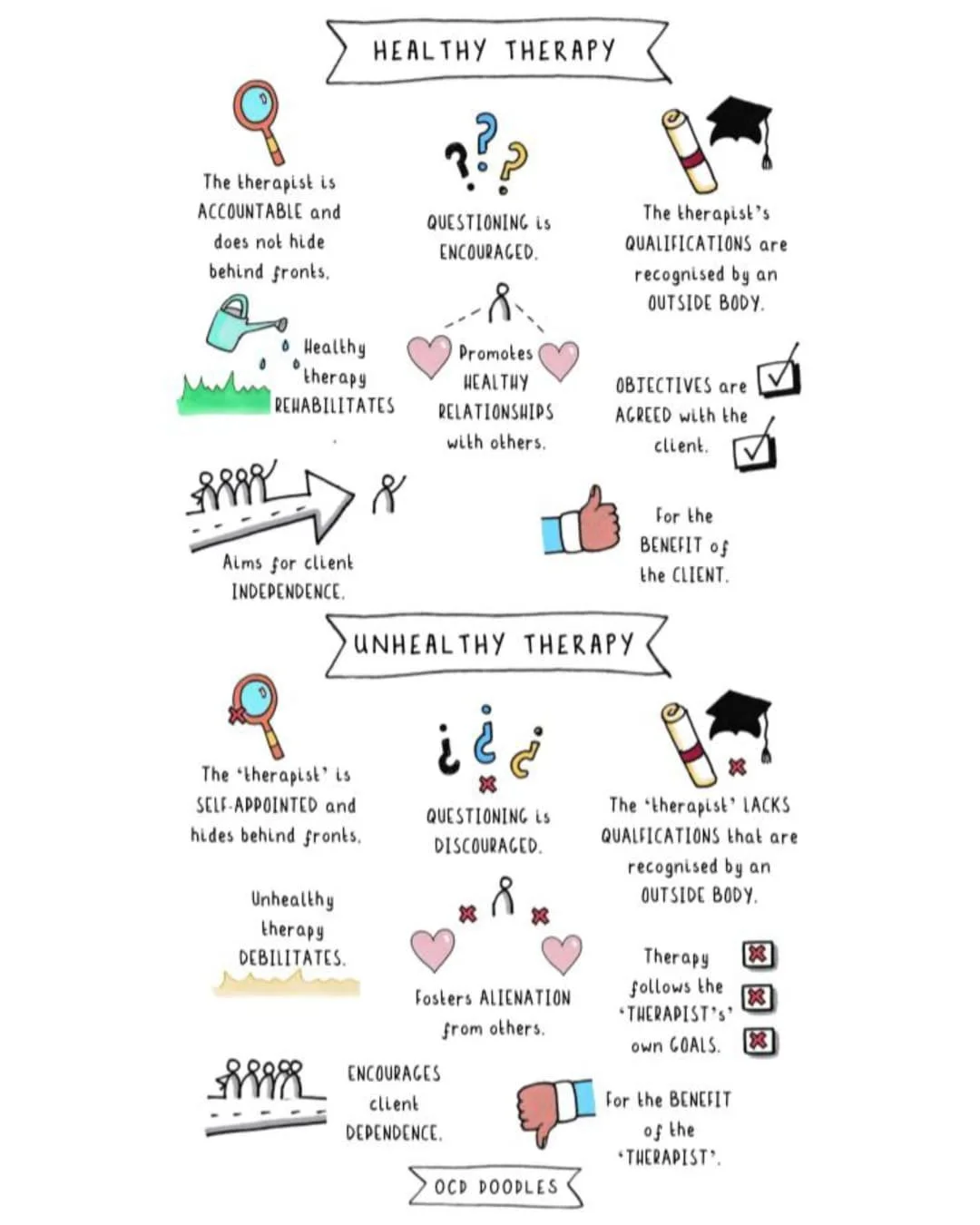
Healthy vs. Unhealthy Therapy
This doodle was based on a speech by Baroness Jolly about the impact of unregulated and unqualified people providing therapy.
I didn’t create the ideas, but I wanted to put them into a visual form.
5. I beat myself up for setbacks
I had heard “progress isn’t linear” so many times. But knowing that and living it are very different things.
When I slipped back into old patterns, I treated it like proof that I had failed. I criticised myself, felt hopeless, and like I had undone everything. That shame made things heavier.
I wish I had understood sooner that setbacks didn’t mean I was back at the beginning. They were part of the messy, human process of learning and moving forward, imperfectly.
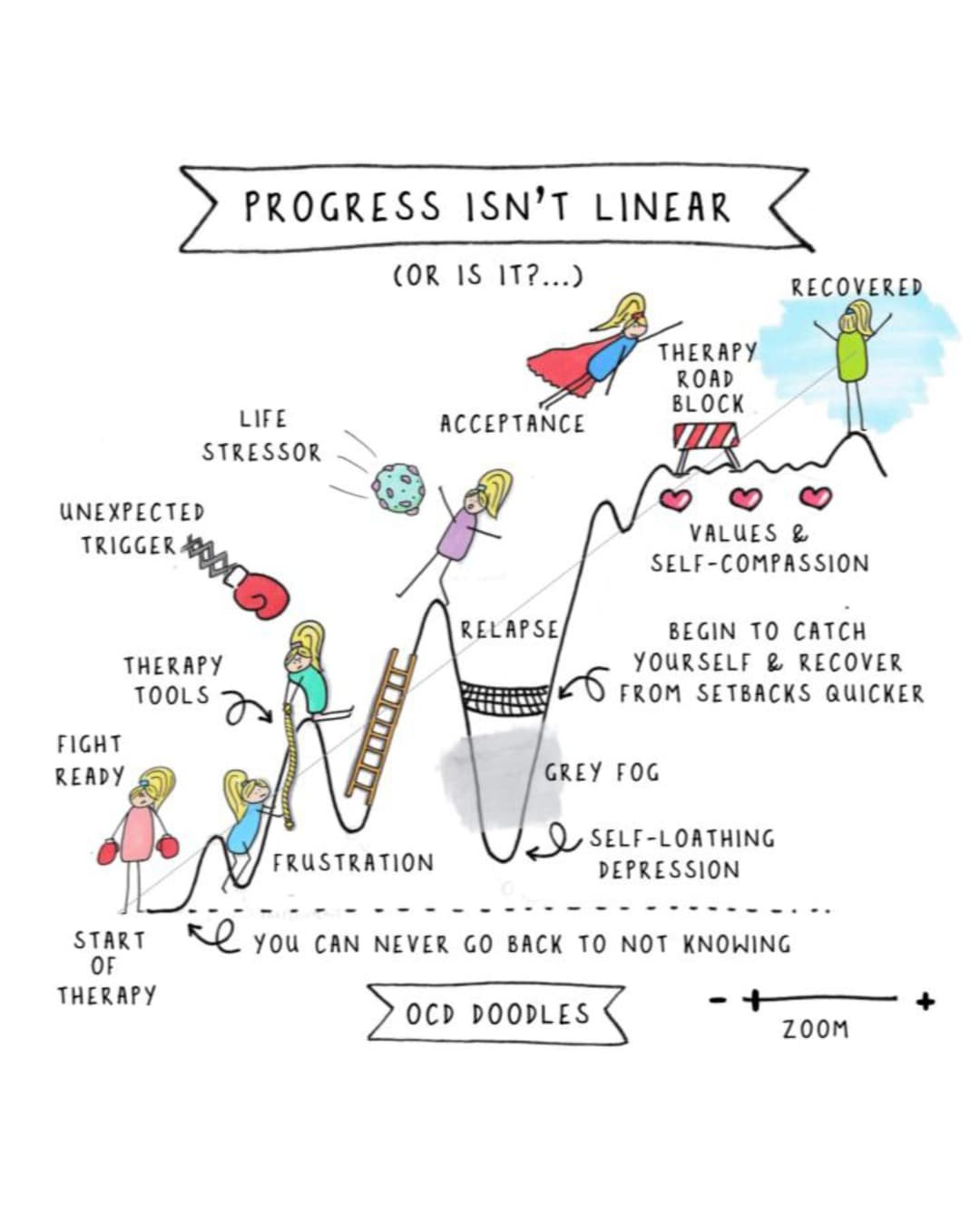
Progress Isn’t Linear (or is it?)
Recovery didn’t feel linear to me at all when I was in it. Every setback felt like I was going backwards.
But looking back, I can see I was still moving forward, just not in a perfect straight line. I couldn’t go back to not knowing what I knew. And over time, I started to catch myself and recover from setbacks a bit quicker.
When I zoomed out, the generaly trajectory was actually up.
What I wish I had known
Looking back, so much of my recovery was affected by not being able to see the patterns clearly.
I didn’t need a perfect explanation for every thought. I needed a way to understand the loop I was in and to be treated by somebody who had the clinical expertise and experience that allowed me to overcome my OCD in a structured and ethical way.
That’s a big part of why I create OCD Doodles. Not as therapy or medical advice, by any means. But as visual resources that can help people recognise patterns, find language for what they’re experiencing, and maybe take something clearer into a conversation with a therapist or loved one.
If this helped you make sense of things
If any of this felt familiar, you might find these helpful too:
These all explore the patterns behind OCD in a visual way, which is something that really helped me start to make sense of what was going on.
About OCD Doodles resources
OCD Doodles are visual resources I created from lived experience, not as therapy or medical advice, but to help make OCD feel more understandable and easier to talk about.
They’re available in a few different ways:
Personal use licences for individuals who want to use the resources for their own understanding
Single practitioner licences for qualified therapists using them in 1:1 client work
Membership access for therapists who want a growing library of visuals
Paid content licences for use in courses, websites, or other public-facing work
There are also physical versions of some doodles available, like posters and prints.
I hope you can find something that feels useful, whether for your own understanding, to share with a loved one, or to support conversations in 1:1 client work.